Diamond 4Cs Explained: Cut, Colour, Clarity and Carat Weight
Understand the four internationally recognised characteristics used to describe a diamond, and how to compare natural and laboratory-grown diamonds with confidence.
1. Cut — the beauty of light
Cut describes how well the facets and proportions handle light, producing brightness, fire and scintillation. It is not the same as the diamond's outline or shape. For standard round brilliant diamonds, laboratory cut grades may range from Excellent to Poor. Fancy shapes require careful inspection of symmetry, polish and visual performance.
2. Colour — the D–Z scale
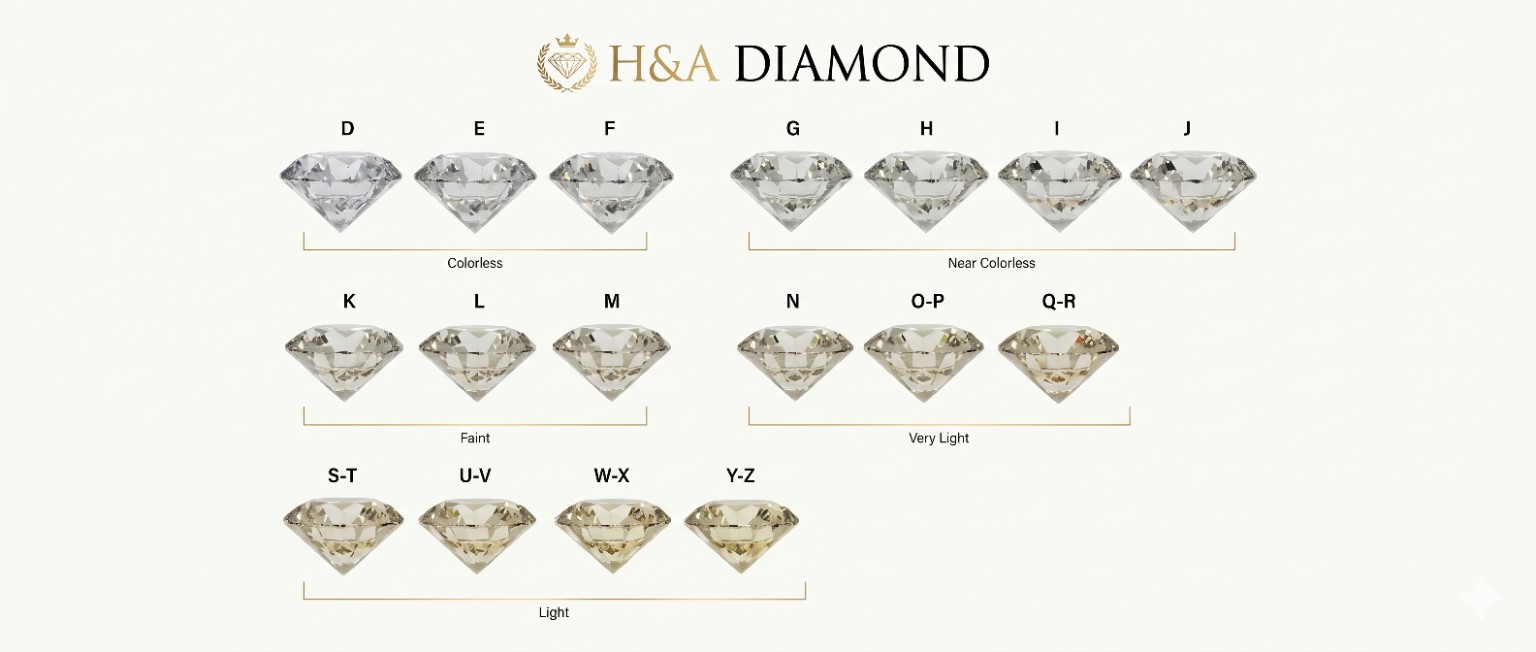
On the traditional D-to-Z scale, D–F is colourless, G–J near colourless, K–M faint, N–R very light and S–Z light colour. The scale describes typical white-to-yellow/brown body colour; fancy-colour diamonds are evaluated differently. Compare diamonds under consistent lighting.
3. Clarity — internal and surface characteristics
Clarity grades are FL, IF, VVS1, VVS2, VS1, VS2, SI1, SI2, I1, I2 and I3. Inclusions and blemishes are evaluated by trained graders at 10× magnification. A lower clarity grade does not automatically mean an inclusion is obvious to the naked eye. Request the grading report and inspect the actual stone.
4. Carat — weight, not diameter
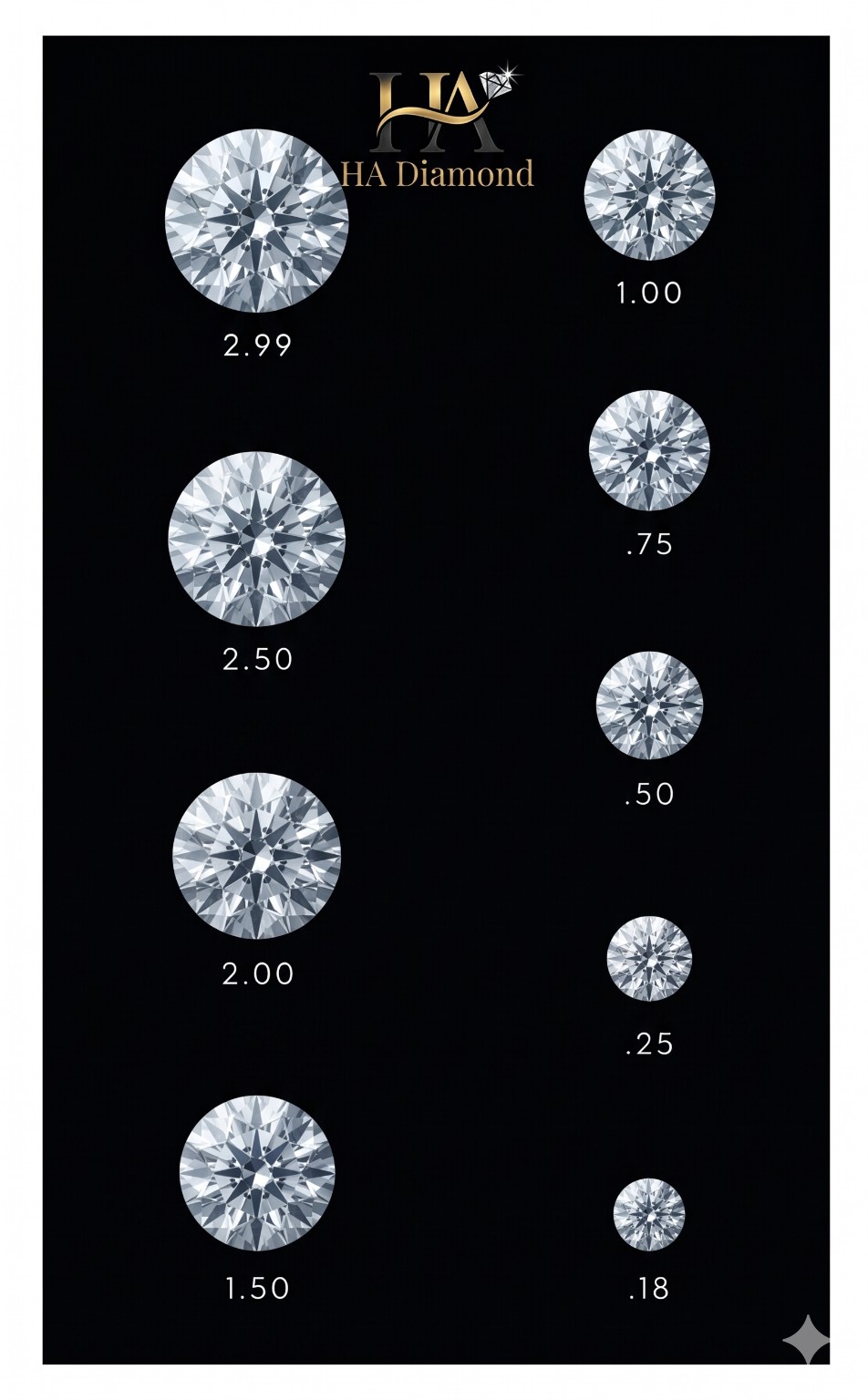
One carat (1.00 ct) is 200 milligrams, and 100 points make one carat. Therefore 7 points = 0.07 ct, 30 points = 0.30 ct, and 50 points = 0.50 ct. Two diamonds of equal carat weight may differ in face-up dimensions because of shape and proportions.
How to choose a diamond
Start with your preferred shape and budget. Compare cut performance, then colour and clarity side by side, and use carat weight as one factor rather than a measure of quality. Check whether the grading report identifies the stone as natural or laboratory-grown, verify its report number, and request measurements and videos when possible.
For trade buyers: ask for the stone count, individual stone weight, total carat weight, matched size tolerances, colour/clarity range, metal specifications and finished jewellery measurements before requesting a quote.
Illustrative charts, not grading certificates. Sources: GIA diamond 4Cs and IGI diamond education.